
Section Three · Logistics
Traveller Essentials
Preparing for a journey through Egypt demands more than a map. This guide covers climate, communication, transport, and the daily logistics every traveller into Egypt should understand before setting out.
Climate · Customs · Transport · Health · Currency · Connectivity · Dress · Photography · Waste · Bazaars
Introduction
A practical field guide for the independent traveller
Egypt is not a single environment. The coast, the Nile Valley, the western oases, and the deep desert each follow their own rules of weather, movement, and social exchange. A traveller into Egypt who prepares for only one of these zones will find the others disorienting.
Our egypt travelling guides are written for people who move independently — who take local transport, eat where the drivers eat, and negotiate their own way through markets and border towns. The advice below covers the logistics that decide whether a day goes smoothly or falls apart: what to pack for the temperature swing, how to address a shopkeeper, which mode of transport fits which route, and where connectivity drops out entirely.
Read it before you leave, then keep it on your phone for reference once you arrive.
01 · Climate
Understanding the climate zones
Egypt is not universally hot. While the summer months are intense, winters can be surprisingly cold, especially in the desert and the north. Layering is the single most useful packing strategy, as temperatures can drop significantly once the sun goes down. Below is a regional breakdown to help you pack for the zones you actually plan to visit.
Nile Valley & Cairo
Summer daytime highs regularly exceed 35°C, while winter nights can fall to 10°C or below. Dust is a constant presence from spring through early summer. Pack breathable layers, a scarf for windblown sand, and a warm layer for evenings from November through February.
Red Sea Coast
Warm year-round with consistent breezes. Summer is hot but dry, and the sea provides natural relief. Winter is mild and pleasant. Sun protection matters here more than anywhere else in the country — a wide-brimmed hat and long-sleeved swim cover are more effective than sunscreen alone.
Western Desert & Oases
The most extreme swing in the country. Daytime can reach 40°C in summer; the same night can drop to near freezing. From October to March, a fleece or insulated jacket is essential. Carry extra water beyond what you think you will need — distances between supply points are long.
The coolest region in winter. Mountain towns can experience near-freezing nights from December through February, and occasional snow at higher elevations. Sturdy walking shoes, a windproof layer, and thermal underwear are reasonable for winter visits. Summer is warm but far more forgiving than the lowland desert.
02 · Language
Respectful communication and language
Many people in urban centres speak English, and you can manage in Cairo or coastal resorts without Arabic. But knowing a few phrases of Egyptian Arabic changes how people respond to you. A greeting, a thank-you, and a polite refusal are enough to shift the tone of most interactions.
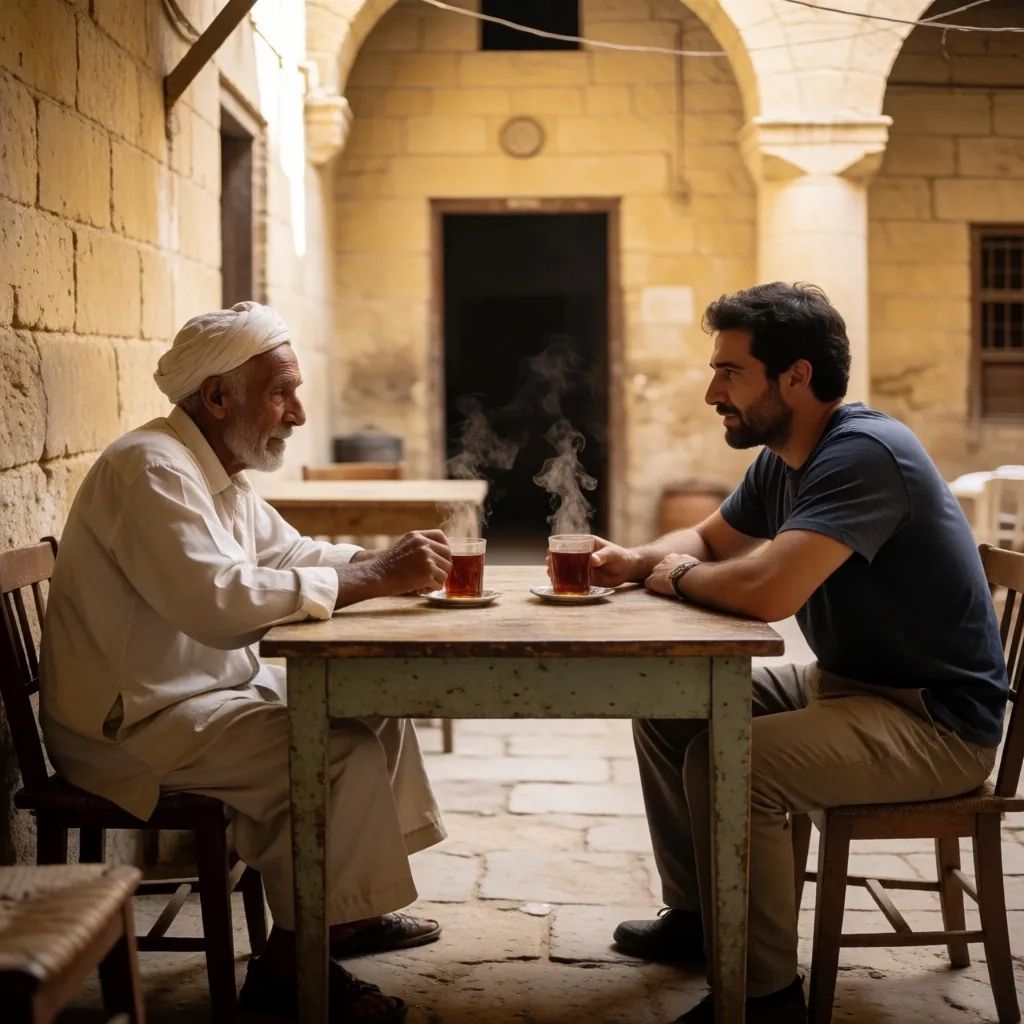
Patience matters as much as vocabulary. Rushing a conversation, especially in a market or with a driver, reads as rudeness. Sharing tea before discussing business is common and not a stalling tactic. Sit, accept the glass, and let the conversation find its own pace.
03 · Transport
From trains to tuk-tuks
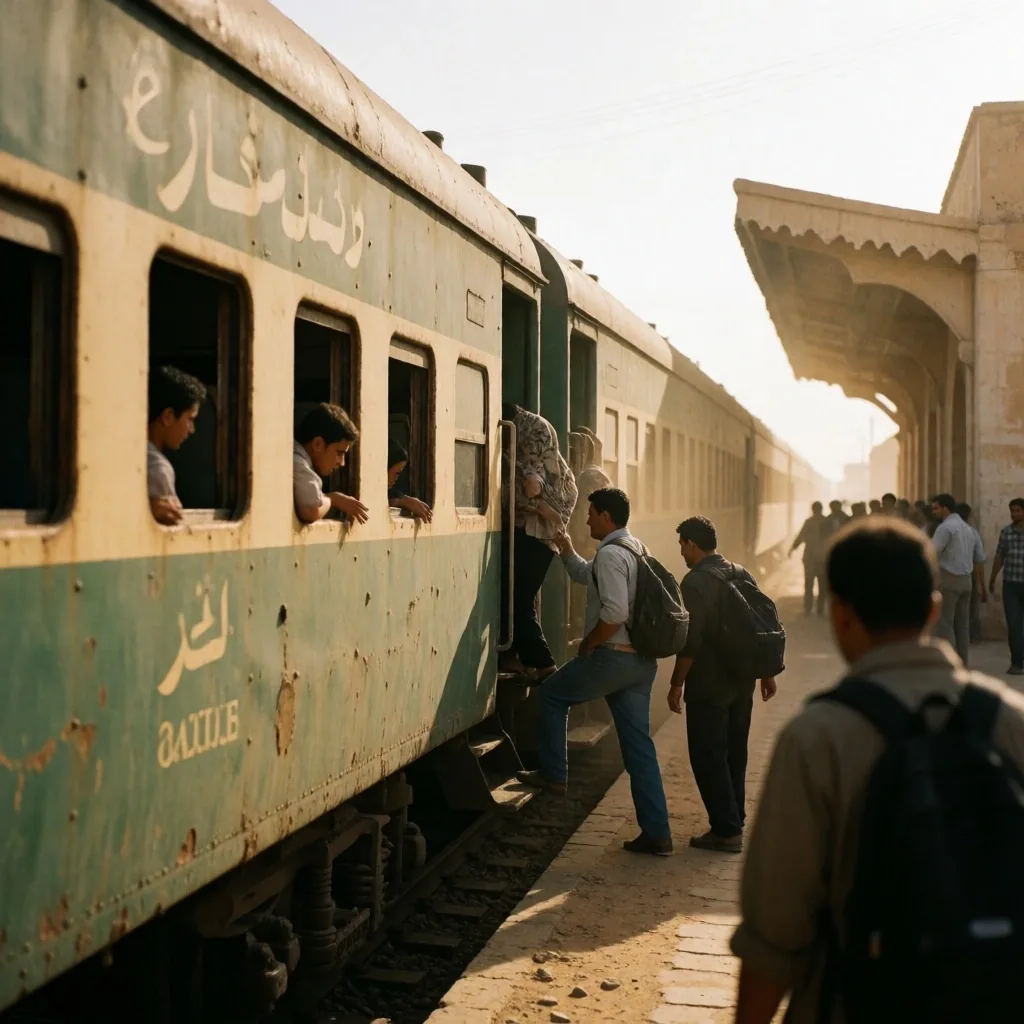
The rail system is the backbone of long-distance travel along the Nile corridor, connecting Cairo to Luxor, Aswan, and the Delta cities. Sleeper and seated classes exist; seats can fill a day or two ahead during local holiday periods.
Within towns, microbuses and tuk-tuks handle the streets drivers know by landmark rather than street name. Ferries cross the Nile at intervals where bridges are far apart. Some transport hubs are informal — a corner, a plaza, a stretch of road — rather than a marked terminal. Ask a local where the vehicle for your destination leaves from, and confirm the fare before getting in.
04 · Health
Health and hydration strategies
Water
Drink more than you think
Heat and dust dehydrate faster than a cool climate does. Carry water at all times in the desert and along the Nile. Sip steadily rather than waiting until you feel thirsty — by then you are already behind.
Food
Eat where the locals eat
Busy stalls with high turnover are generally safe. Avoid raw vegetables washed in tap water, and peel fruit yourself. Cooked food is your friend — the kitchen heat handles most risks.
Kit
Bring the basics
Oral rehydration salts, pain relievers, stomach settlers, and any personal prescriptions. Pharmacies are common in towns, and most pharmacists speak enough English to help with minor complaints.
Sun protection is part of health, not a separate concern. A wide-brimmed hat, sunglasses, and long sleeves made of breathable cotton or linen do more than sunscreen alone. The sun is strongest between 11:00 and 15:00 — plan indoor or shaded activity for those hours when you can.
05 · Currency
Managing your finances
The local currency is the Egyptian Pound. Cards are increasingly accepted in major cities and larger hotels, but cash remains the only option in rural areas, oases, and most markets. Carry enough notes for a few days at a time when you head away from urban centres.
Keep small denominations on hand. Tipping is customary for small services — a bathroom attendant, a parking helper, a bag carrier — and large notes are hard to break in those situations. Reliable exchange services are found at banks and official exchange offices; rates at airport counters are generally less favourable.
06 · Connectivity
Electrical standards and connectivity
Egypt uses the standard European two-pin plug and a 220V system. A universal adapter covers most situations. Mobile connectivity is generally good in the Nile Valley and along the coast, but it can disappear quickly once you enter the deep desert or remote mountain areas.
A local SIM card is inexpensive and available at airport kiosks and city shops. Bring an unlocked phone. Download offline maps for any region where you expect to lose signal, and let someone know your intended route before heading into areas with no coverage.
07 · Dress
Social norms and dress codes
Egypt is a conservative society, and dressing respectfully matters for both men and women. Covering shoulders and knees is a reliable general rule that applies in towns, villages, and any place of worship. On Red Sea beaches, swimwear is acceptable at the shoreline but should be covered when you walk back through the resort or into a café.
For visits to places of worship, women should carry a scarf to cover their hair, and everyone should remove shoes before entering carpeted prayer areas. Loose, breathable clothing in cotton or linen is both the most respectful and the most practical choice for the climate.
Dressing conservatively is not about blending in — most travellers will stand out regardless — but about signalling that you understand where you are. It reduces unwanted attention and opens conversations that tighter or more revealing clothing would close.
08 · Photography
Photography and permitted areas
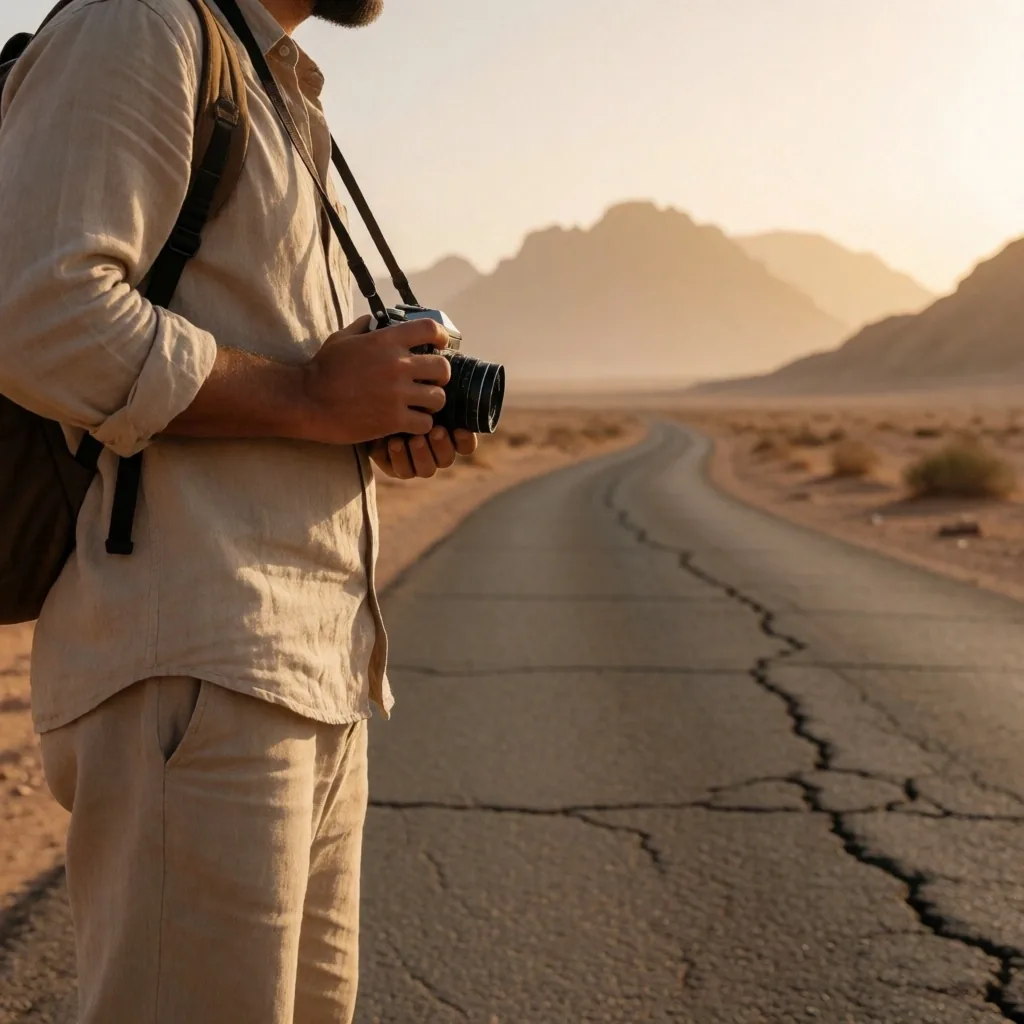
Capturing the landscape is a highlight for many travellers into Egypt, but the rules around cameras are stricter than in many destinations. Some historical sites prohibit photography entirely; others charge a separate fee for camera use at the entrance. Look for posted signs or ask a guard before raising a lens.
Professional equipment — anything with a large removable lens or a tripod — often draws different rules than a phone or compact camera. Sensitive infrastructure includes bridges, military checkpoints, police stations, and government buildings. When in doubt, put the camera away.
Always ask before photographing people. Many will agree happily; some will decline, and that decision should be respected immediately. A polite request in Arabic — even just a gesture and a smile — goes a long way. Offering to show the photo on the screen afterwards is a kind gesture that often turns a refusal into a yes on a second visit.
09 · Environment
Waste management and your environmental footprint
As an independent explorer, your impact on the environment should be minimal. The desert and the Red Sea reefs are fragile systems that recover slowly from litter and chemical runoff. The egypt travelling guides on this site follow a leave-no-trace philosophy — carry out everything you carry in, and dispose of waste at proper facilities in the nearest town.
Single-use plastic is the most visible problem along roads and shorelines. A reusable water bottle with a built-in filter, a cloth bag for market purchases, and a refusal of plastic straws are small habits that add up across a trip. Reef-safe sunscreen matters if you swim near coral — standard sunscreens contribute to bleaching.
Stay on marked trails in desert and mountain areas. Vehicle tracks scar the landscape for decades, and off-road driving disturbs the few animals that survive in these zones. Walk where the guides walk, and leave the ground as you found it.
10 · Bazaars
Navigating the bazaars
The traditional markets — the souqs — are the centre of commercial and social life in most Egyptian towns. They are loud, fragrant, and persistent. A first visit can feel overwhelming, but the bazaar follows a logic that becomes clear once you slow down and observe.
Sellers expect conversation. A price is an opening, not a conclusion. Counter at roughly half, then let the discussion settle in the middle. Walk away politely if the number does not work for you — you may be called back. Do not begin a negotiation you have no intention of completing; it wastes goodwill on both sides.
View the market as a cultural experience rather than a place to shop. Accept tea if it is offered. Ask about the work behind an object rather than only its cost. The sellers you engage with respectfully will remember you, and the second visit is always easier than the first.
Carry small cash. Negotiate with a smile. Learn the name of what you are buying.
Accept tea if offered. Ask before photographing a stall or a person.
Starting a negotiation you will not finish. Touching goods without permission.
Blocking the main lane. Raising your voice. Photographing people who decline.
Continue Reading
More travel guides for the journey ahead
The advice here covers logistics. The rest of our egypt travelling guides cover where to go — coastal retreats, desert routes, heritage walks, and the Nile corridor.
Egypt Discovery Guide · Traveller Essentials · End of Section