
Section I — Orientation
Cultural Heritage Walks and Ancient Landscapes
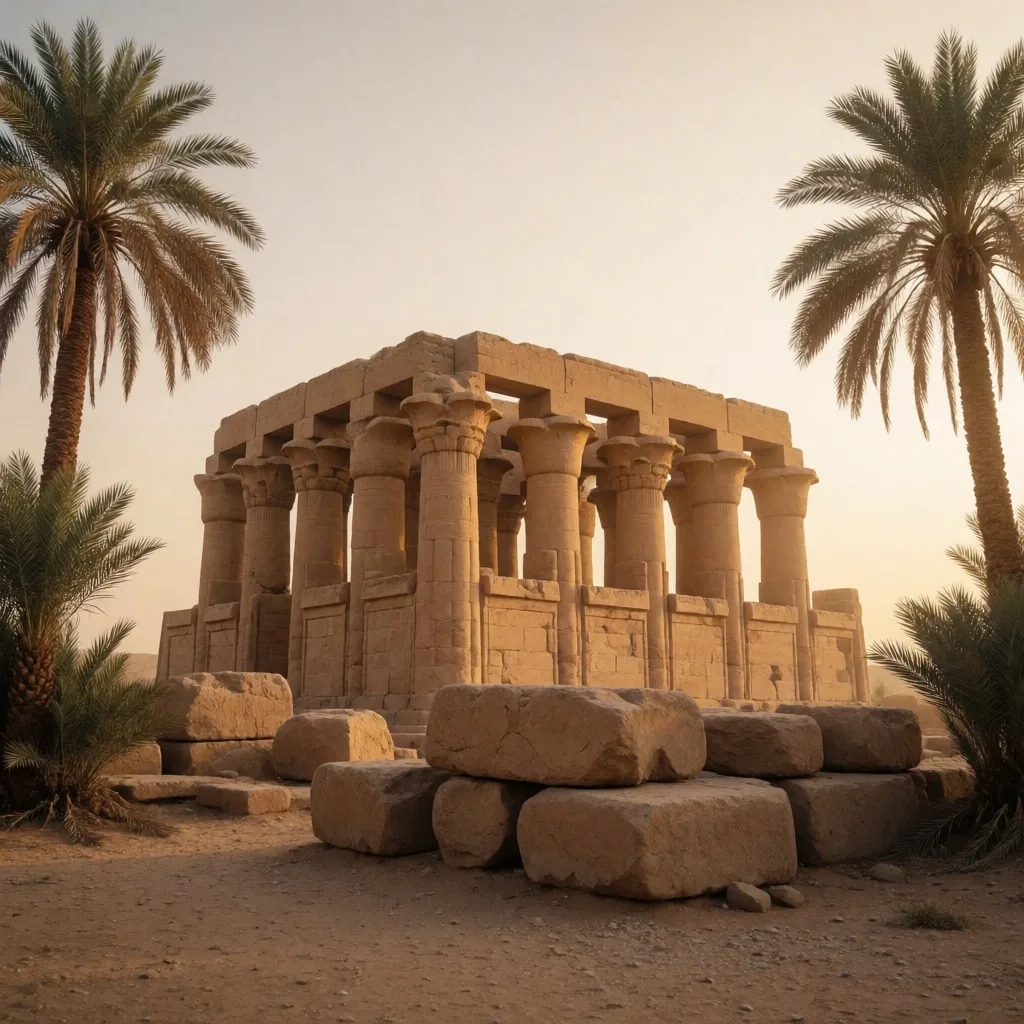
Egypt's heritage is etched into the very stones of its landscape. Beyond the modern cities lies a wealth of megalithic architecture that tells the story of early civilizations, their beliefs, and their technical prowess. These travel guides present the historical sites with editorial clarity for the independent visitor.
Chapter 01 — Giza & Saqqara
The Architectural Logic of the Pyramids
The structures at Giza and Saqqara are the result of centuries of architectural experimentation. The pyramid form did not appear fully formed. It evolved through trial, failure, and refinement across multiple dynasties, from the early stacked mastaba to the stepped design at Saqqara, and finally to the smooth-sided giants that define the Giza plateau.
Our egypt travelling guides explain the mathematics and engineering behind these monuments without the hype often found in commercial tours. The orientation of each structure is tied to cardinal points with remarkable precision, suggesting a working knowledge of astronomy that predates the monuments themselves. Understanding the alignment and the purpose of these stone mountains is key to appreciating their scale.
The transition from stepped to smooth-sided construction required a shift in casing techniques. Limestone facing blocks were quarried across the river and transported by boat, then fitted with joints tight enough to resist centuries of wind erosion. The internal chambers, accessed through narrow corridors, reveal a sequence of engineering decisions made over decades of construction.
Structural Criteria
What the Stones Tell Us
Chapter 02 — Luxor West Bank
The Theban West Bank
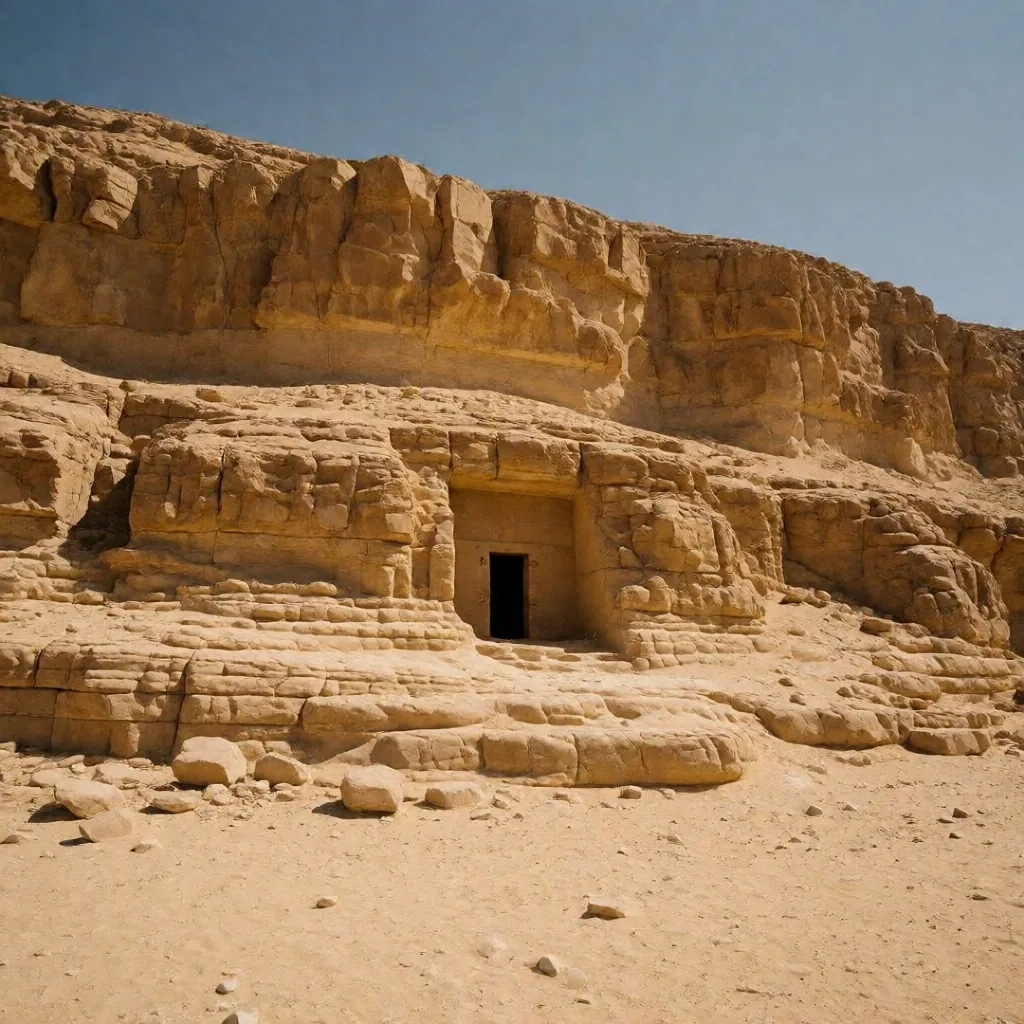
Opposite the modern city of Luxor lies a vast necropolis where the rulers of the New Kingdom were laid to rest. The geography of the West Bank, with its hidden valleys and limestone cliffs, was chosen for its natural security and its symbolic connection to the setting sun and the realm of the dead.
We detail the layout of these burial grounds and the intricate carvings that decorate the underground chambers. The tombs follow a standard sequence of corridors and rooms, each decorated with scenes from the underworld books. Our focus is on the artistry and the logistical effort required to cut these spaces into solid rock and paint them in the dim light of oil lamps.
For any traveller into Egypt seeking context beyond the visual impact, the West Bank offers a dense record of how craft, labour, and theology combined across several centuries of continuous use.
Field Find — Plate 03
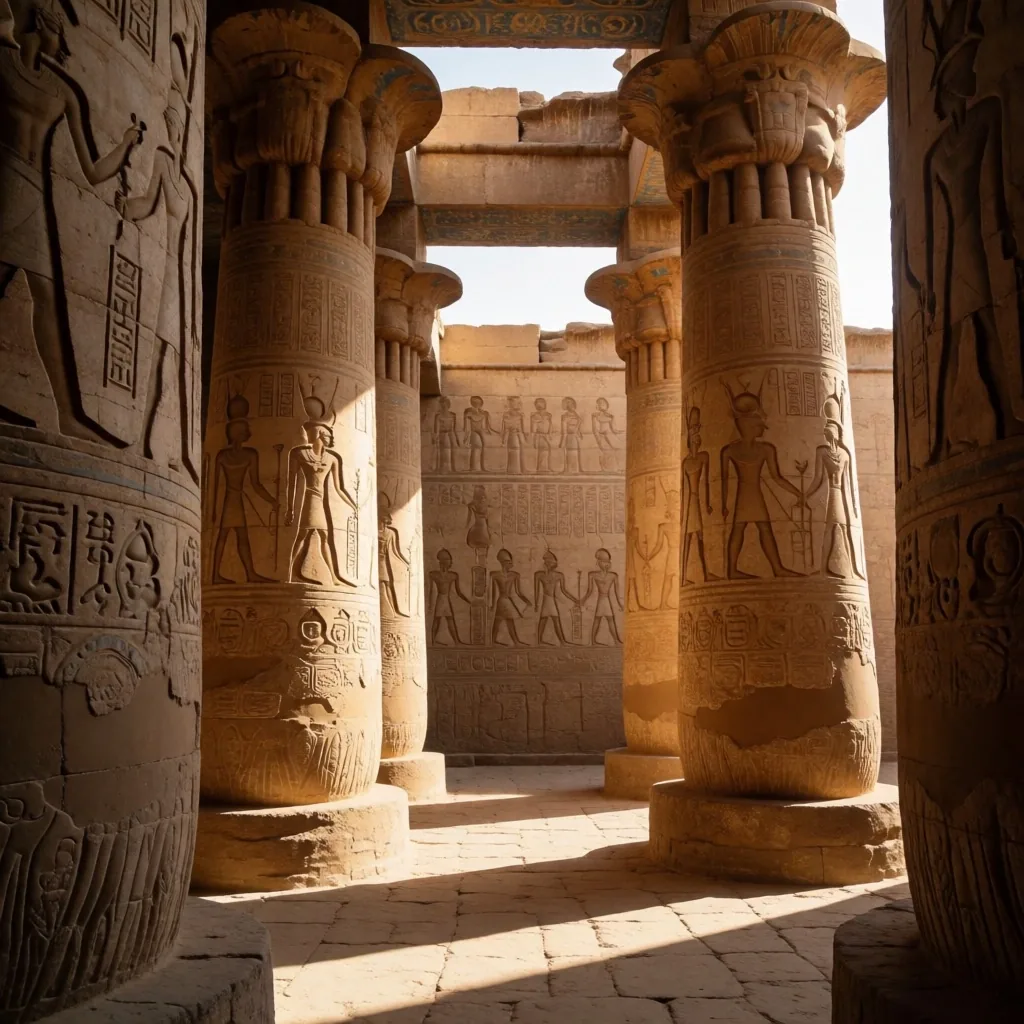
Hypostyle hall, Edfu. Sandstone columns carved with ritual scenes.
Chapter 03 — Nile South
Temple Complexes of the South
As you travel south along the Nile, the temples become more frequent and better preserved. These structures were the centers of religious and economic life, designed as symbolic representations of the primordial mound from which creation was believed to have risen.
We look at the pylon gates, the hypostyle halls, and the inner sanctuaries that define the classic Egyptian temple plan. The progression from open courts to dimly lit inner rooms mirrors a ritual journey from the public world to the sacred. Our travel guides provide context on the materials used, primarily sandstone and granite, and how they were transported hundreds of kilometres along the river and overland.
The pylon towers, with their sloping walls and flagstaffs, served as gateways that separated the sacred precinct from the surrounding settlement. Behind them, the hypostyle halls relied on dense forests of columns to support a stone roof, creating a deliberate transition from bright sunlight to deep shade as a visitor moved toward the sanctuary.
Chapter 04 — Late Period
The Greco-Roman Influence
In the later periods of its history, Egypt saw a synthesis of local traditions and Mediterranean influences. Sites in the north and the deep south reflect this blend of styles, with Egyptian motifs often combined with Greek and Roman architectural elements.
We explore these transitionary sites to show how the culture evolved through changing political eras while maintaining a continuous thread of heritage.
Chapter 05 — Religious Transitions
Early Christian and Islamic Heritage
The landscape is also dotted with ancient monasteries and medieval mosques that represent the religious shifts in the region. From the remote desert retreats of the early monks to the grand madrasas of Cairo, these buildings are masterpieces of functional art.
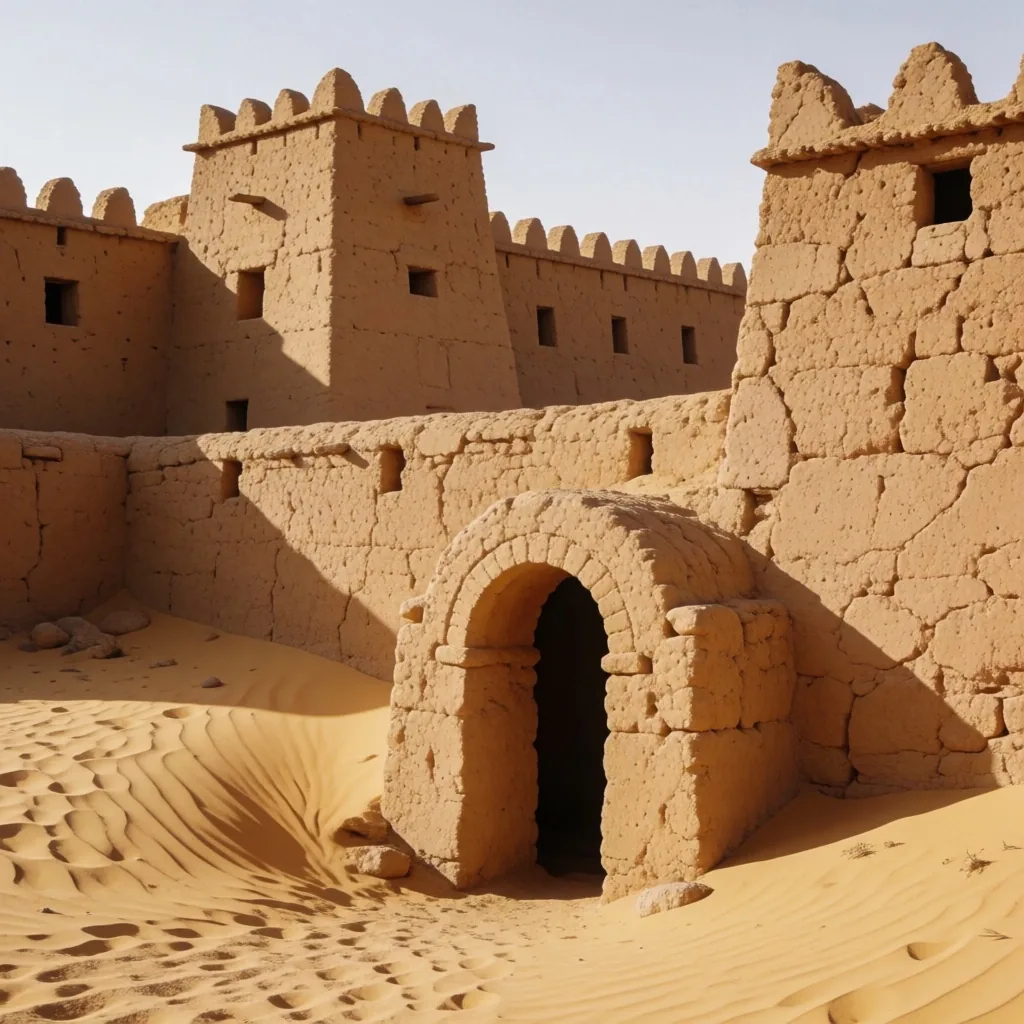
We describe the architectural features of these sites, such as the dome and the minaret, and their significance in both urban and rural landscapes. The desert monasteries, often built within existing fortifications, preserved earlier building traditions while adapting them to communal worship. The medieval mosques and schools of Cairo developed a distinct architectural vocabulary using stone, wood, and plaster that responded to local climate and materials.
These later layers of construction sit directly on or beside pharaonic remains, and reading the landscape means recognizing how each era reused the stone and the plans of the one before it.
Field Find — Plate 05
Desert monastery enclosure. Mud-brick wall with arched entry.
Chapter 06 — Reading the Walls
The Art of the Scribe and the Artist
The walls of Egypt's monuments are covered in a complex system of communication and art. We provide a basic introduction to the iconography and the techniques used by the ancient artists. By understanding the common symbols and the hierarchy of the figures, you can read the walls of the temples and tombs more effectively.
Figures are generally arranged in registers, horizontal bands that organize scenes like lines of text. The scale of a figure signals its importance, with rulers and deities rendered larger than attendants or workers. Direction matters as well: figures facing right indicate movement toward the east, while those facing left look toward the realm of the dead.
Pigments were derived from mineral sources, ochre for red and yellow, carbon for black, and crushed frit for the blue and green that still retain their intensity after thousands of years. This adds a layer of intellectual engagement to your visual exploration, turning a walk through a columned hall into an act of reading.
Chapter 07 — Conservation
Preservation and Site Management
Maintaining these ancient structures is a constant challenge against the elements and modern encroachment. We discuss the ongoing efforts to stabilize the stone and protect the vibrant colors of the paintings.
As a visitor, your actions have an impact on the longevity of these sites. We provide guidelines on how to explore these areas without contributing to their degradation.
- Keep a respectful distance from painted surfaces and carved walls
- Follow marked paths rather than walking on unstable structures
- Avoid touching pigments, as skin oils accelerate deterioration
- Do not remove fragments, pottery shards, or stones from any site
Chapter 08 — Hydraulic Context
The Relationship Between Sites and the Nile
Almost all major heritage sites are located within a short distance of the river, which served as the primary transport route for stone and supplies. We look at how the annual flooding of the Nile influenced the placement and the construction of these buildings.
Understanding the hydraulic history of the region is essential for understanding its heritage. Temples were sited on natural rises that remained above flood levels, and their foundations were laid during the low-water season when transport of heavy stone blocks from distant quarries was most practical.
- Granite from Aswan travelled north by barge during the inundation season
- Limestone from Tura quarries crossed the river to plateau construction sites
- Temples aligned to the flood line for both practical and symbolic reasons
Chapter 09 — Lesser-Known Sites
Off-the-Beaten-Path Ruins
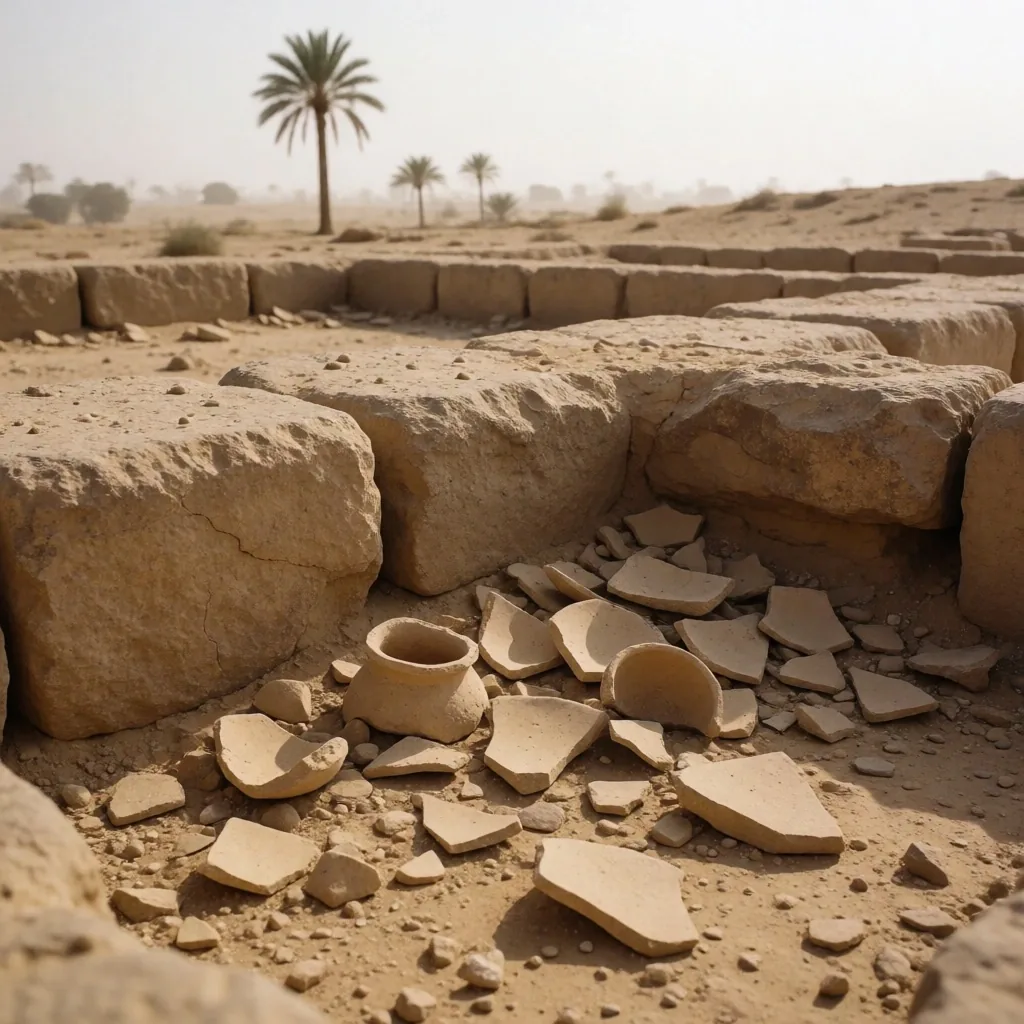
While the famous sites draw the most attention, dozens of smaller ruins are scattered across the oases and the Delta. These sites often offer a more intimate look at daily life in the ancient world, far from the crowds that gather at the major monuments.
Our egypt travelling guides point you toward these lesser-known locations where you can explore the rubble of ancient towns and the foundations of forgotten shrines. In the oases, mud-brick settlements preserve traces of domestic architecture, storage granaries, and small community chapels that the large temple complexes never needed.
In the Delta, changing water levels and dense modern settlement have obscured many sites, but exposed foundations and reused stone blocks in village walls still mark where ancient towns once stood.
Chapter 10 — Geology & Quarrying
The Materials of History
The geology of Egypt provided the palette for its builders. From the white limestone of Tura to the red granite of Aswan, the stones themselves have a history. We explain the sourcing of these materials and the techniques used to quarry and shape them.
Quarrying relied on simple but effective tools: dolerite pounders for granite, copper chisels for softer limestone, and wooden wedges soaked in water to split stone along natural fissures. Transport relied on sledges over sand, with water poured ahead to reduce friction, and barges on the Nile during the flood season.
This perspective turns every monument into a lesson in geology and ancient technology.
Stone Provenance Register
Continue the Journey
Explore more egypt travelling guides across the region
These travel guides connect heritage sites to the wider landscape, from the Nile corridor to the desert oases and the coast. Each route is written for the independent traveller into Egypt who values context over convenience.